Category: Gallery guides

  • Tribeca art galleries: New York’s newest gallery district

    Tribeca art galleries: New York’s newest gallery district

    In short: Tribeca art galleries grew fast after 2017, when Bortolami left Chelsea for Walker Street. By 2023 nearly 60 galleries had opened between Canal and Chambers streets, west of Lafayette Street, triple the 2019 figure. Dealers came for cast-iron lofts, a neighbourhood feel and each other; big names such as David Zwirner and Marian Goodman followed.

    For thirty years the New York gallery map moved from SoHo to Chelsea to the Lower East Side. In the late 2010s it moved again, to the quiet cast-iron streets of Tribeca. Several Tribeca dealers, including Casey Kaplan, Bortolami, Canada and Andrew Kreps, were among the participants in New York Gallery Week in 2010 and 2011. This guide covers how the newest district formed and how to visit it. Gallery Week Notes is independent and has no commercial link to any gallery.

    What is the Tribeca gallery district?

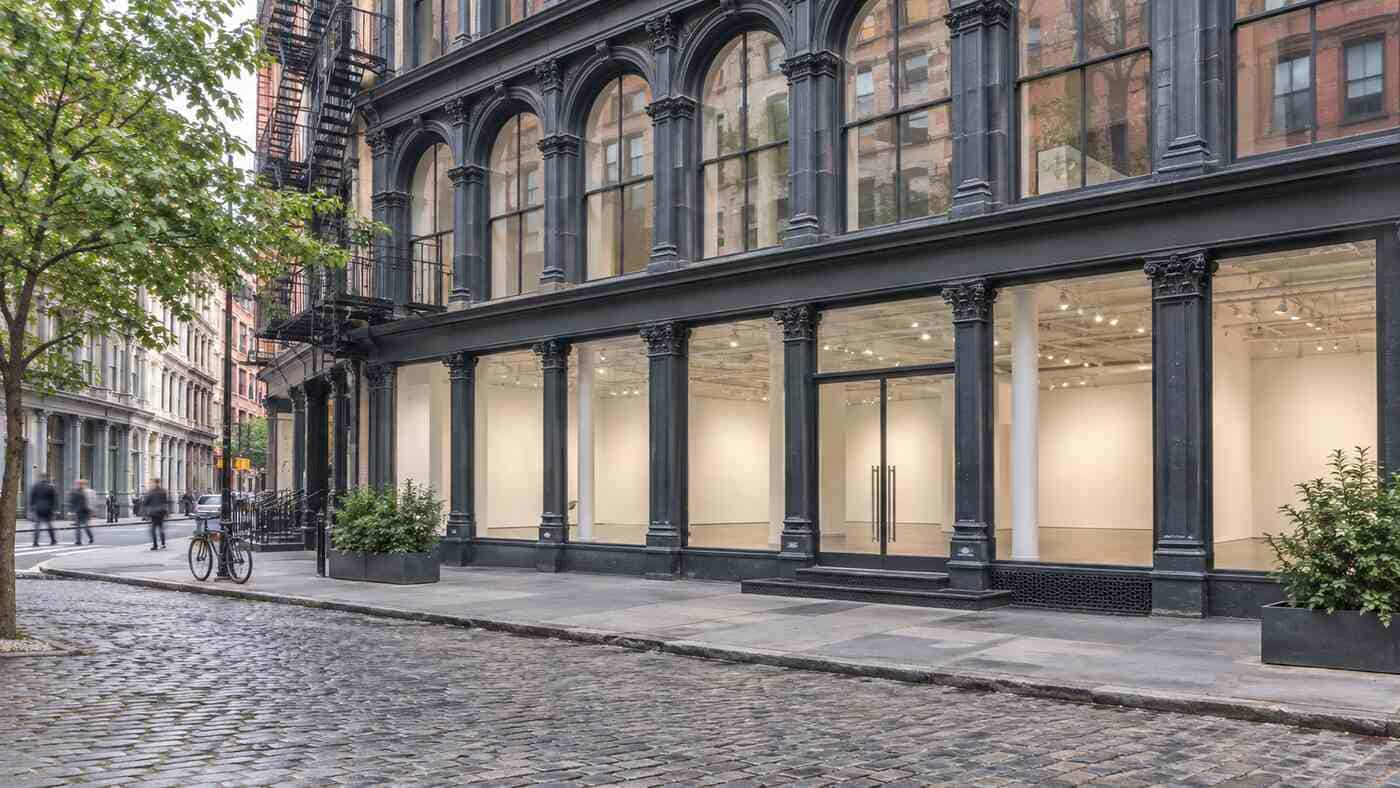
    Tribeca (the “triangle below Canal Street”) is a Lower Manhattan neighbourhood of 19th-century industrial buildings, many once used by textile merchants and printers and later landmarked and converted to homes, according to Hyperallergic. Hyperallergic placed the gallery cluster in central Tribeca, between Canal and Chambers streets and west of Lafayette Street. A cast-iron building is a 19th-century commercial building with a facade of prefabricated iron, typically with large windows and open floors that suit galleries. The Tribeca Arts District directory lists 94 art spaces in and around the neighbourhood.
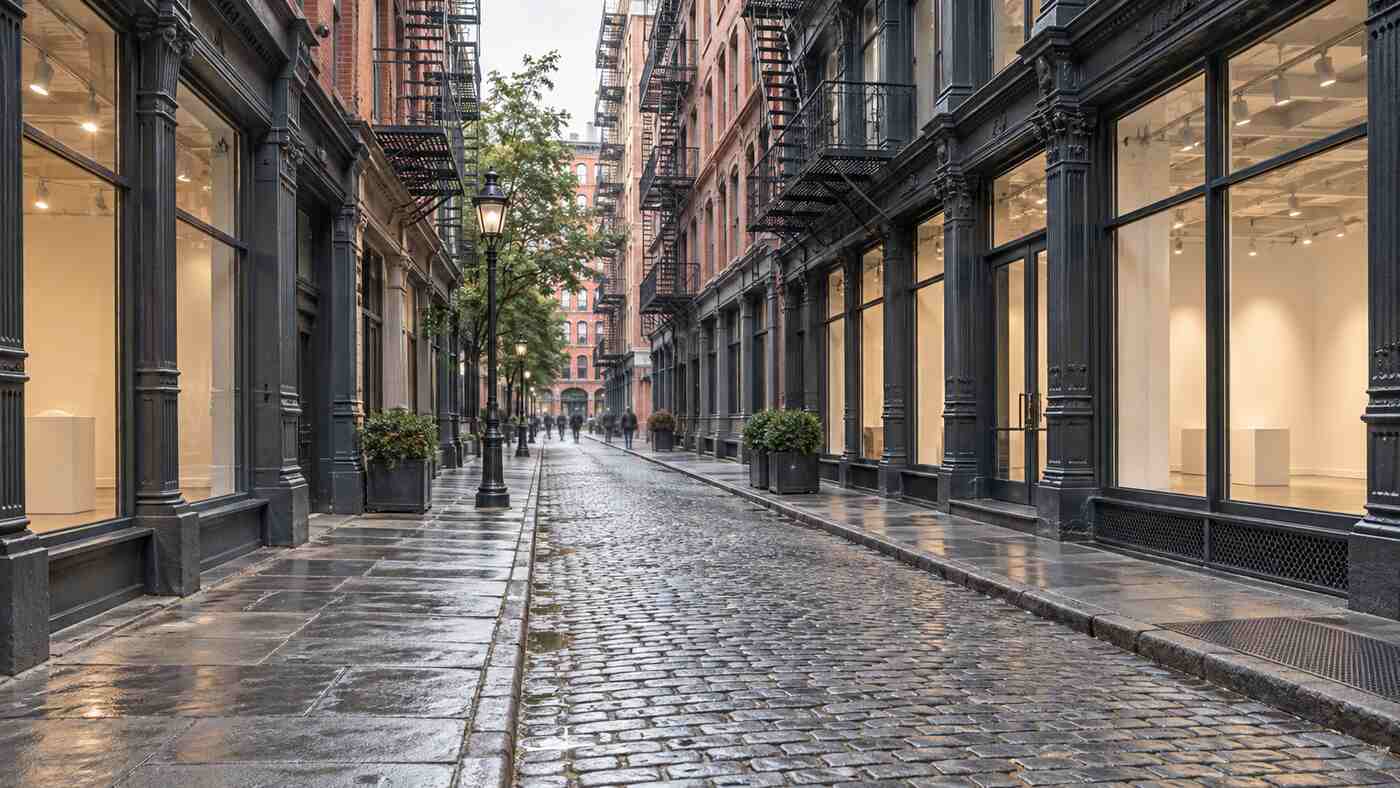
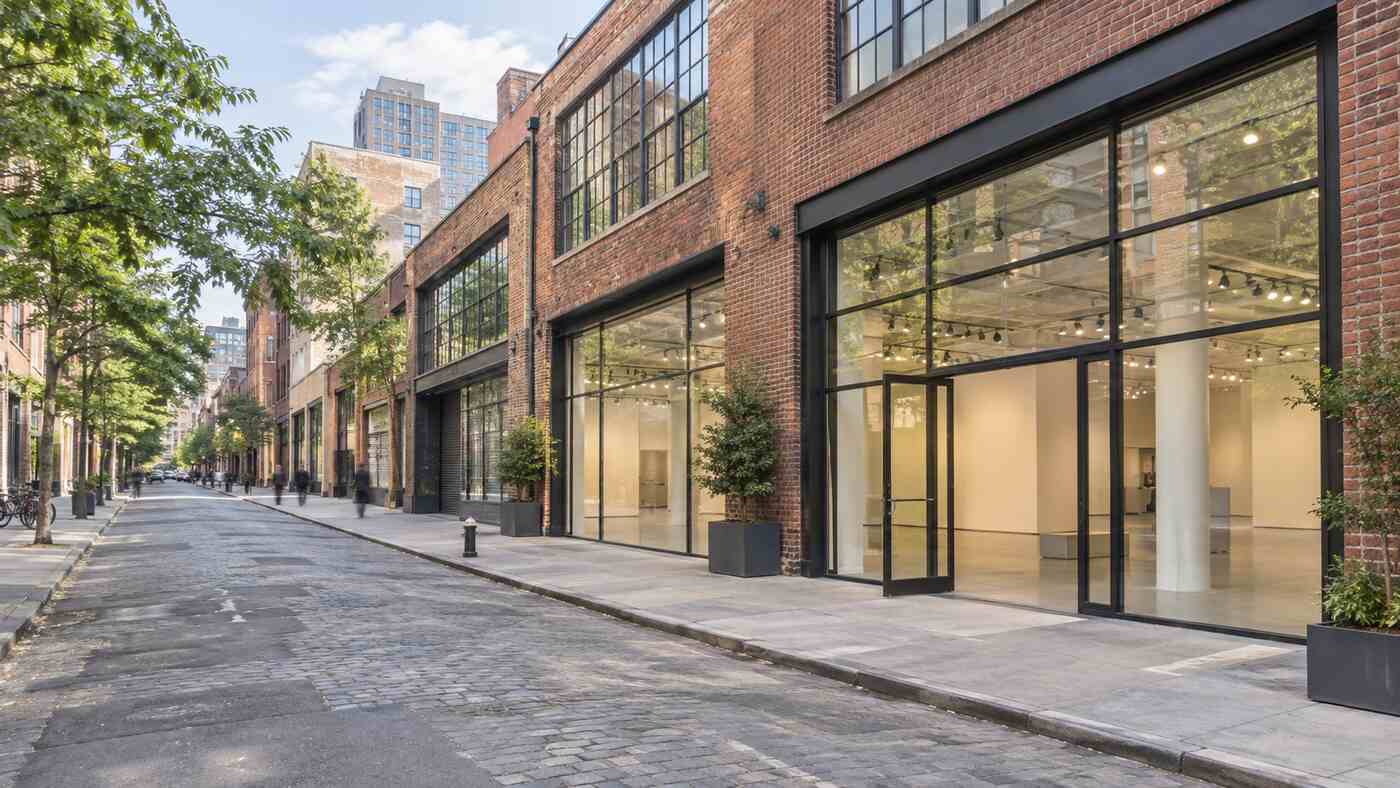
    A narrow cobbled side street lined with cast-iron loft buildings and gallery windows
    Galleries cluster on side streets such as Walker and White. Illustration.

    Why did galleries move to Tribeca?

    The first move of the current wave came in 2017. Hyperallergic reported that Bortolami moved from Chelsea to Walker Street that year, when its landlord decided to gut its building and add offices, and got a space 30 percent larger than its Chelsea one. A year later Canada moved from the Bowery to Lispenard Street, recruited by other dealers including Stefania Bortolami and Andrew Kreps. Canada’s Phil Grauer said galleries came because “it was affordable and the rooms were big enough”.

    By 2019 the shift was visible. Condé Nast Traveler reported in November 2019 that 25 galleries had moved to a seven-block stretch of cobbled streets south of Canal Street over the previous year, naming Andrew Kreps, James Cohan and Canada, with P.P.O.W expected in 2020. In 2021 The New York Times described the neighbourhood as the new centre of the gallery scene.

    The reasons were mixed. The broker Jonathan Travis, who told Hyperallergic he had placed 34 galleries in Tribeca, said many dealers wanted to leave West Chelsea after new development around the High Line and Hudson Yards. Retail spaces in Tribeca’s lofts were often too small for chains but right for galleries, and many buildings had basement storage. During the pandemic, retail rents in Tribeca fell. But the biggest reason dealers gave, Hyperallergic said, was that a gallery they admired was already there.
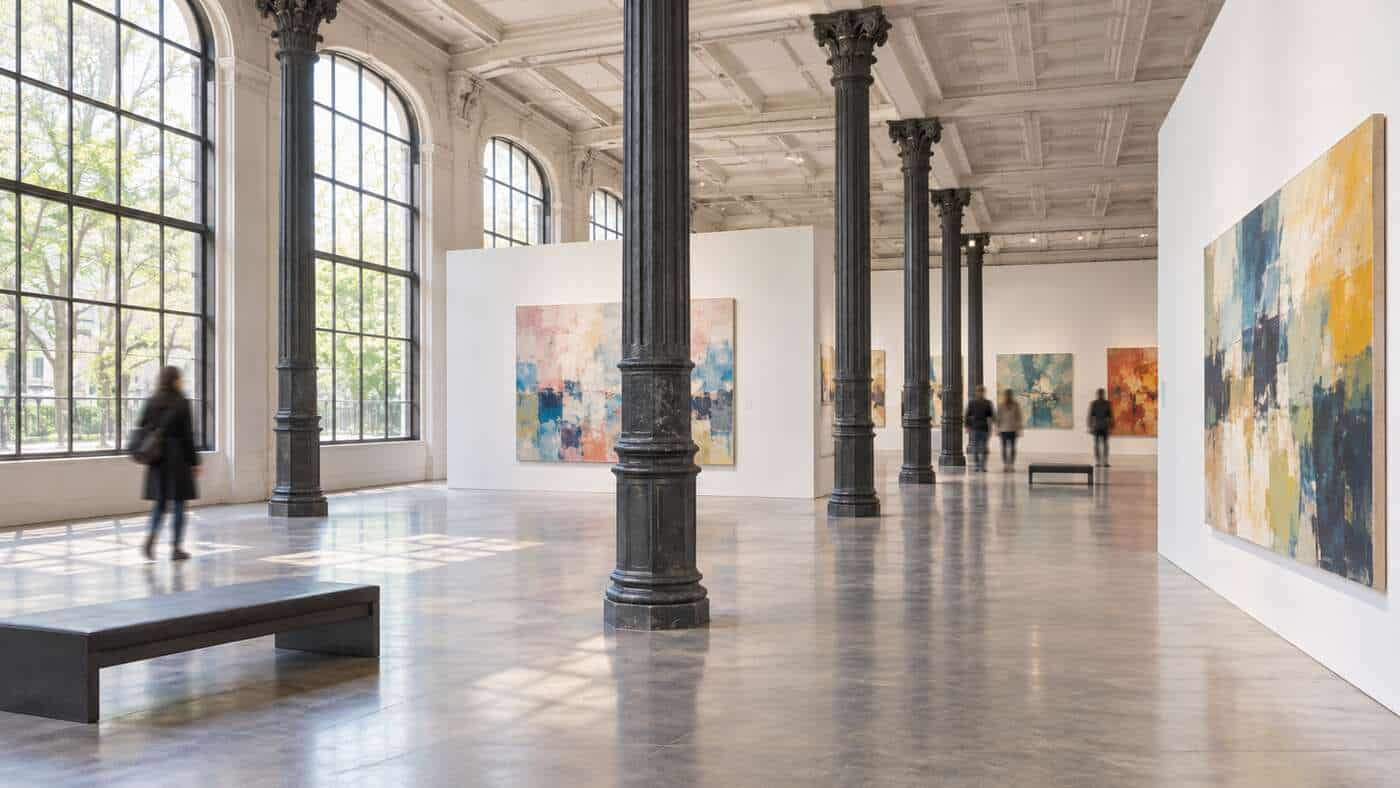
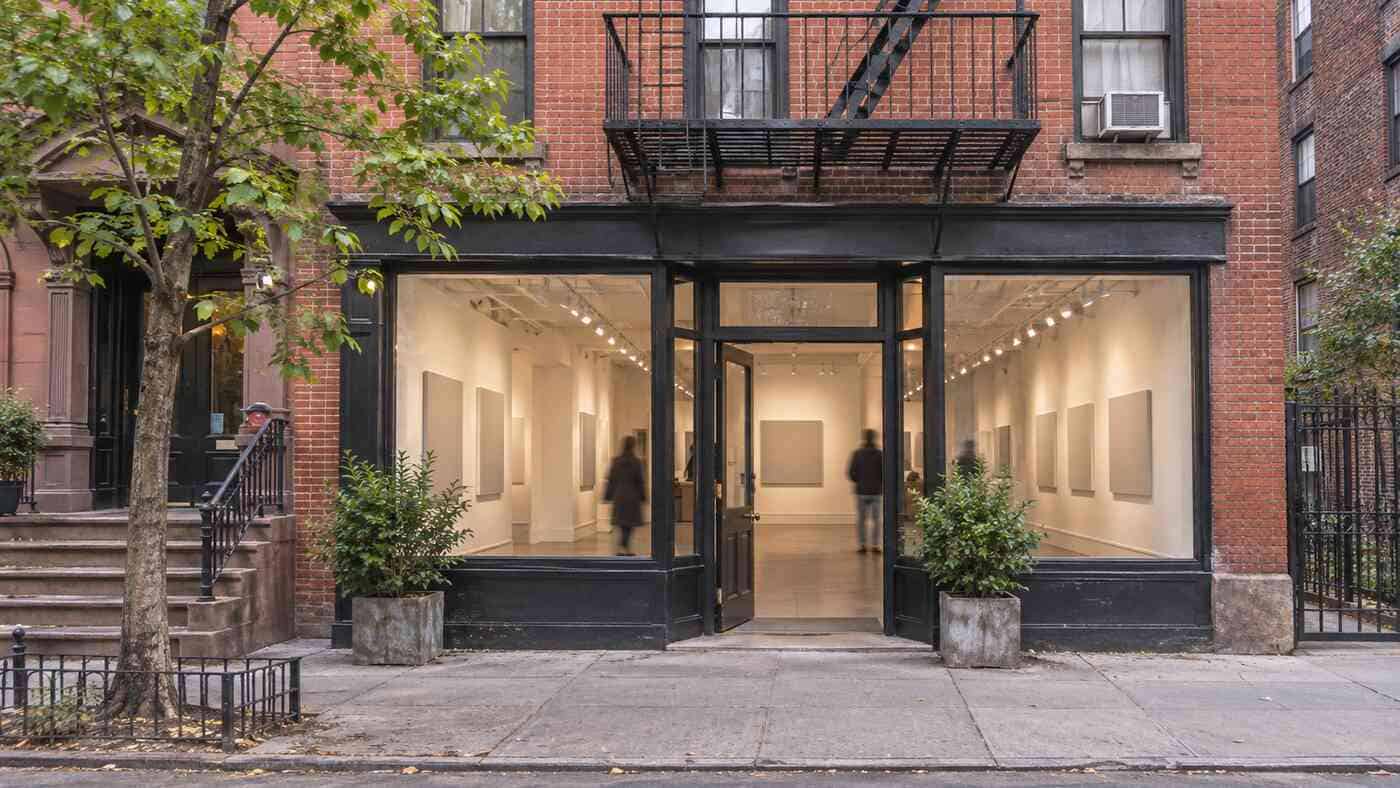
    A gallery with tall cast-iron columns and large windows showing paintings on white walls
    Former industrial lofts gave galleries generous rooms without major renovation. Illustration.

    Tribeca and Chelsea rents compared

    MeasureFigureSource
    Tribeca side-street gallery rents, 20235 to 25 per sq ftHyperallergic, citing Jonathan Travis
    Tribeca and Chelsea, 2023Roughly comparable, about 00 to 20 per sq ftARTnews
    Chelsea’s best blocks, 201620 to 45 per sq ftArtsy, citing CBRE
    Bortolami’s move, 201730% more space than in ChelseaHyperallergic

    ARTnews quoted Travis saying it was a mistake to think galleries were driven out of Chelsea by rent, and that the move was about “feeling” more than balance sheets. The 2016 Chelsea figure comes from Artsy.
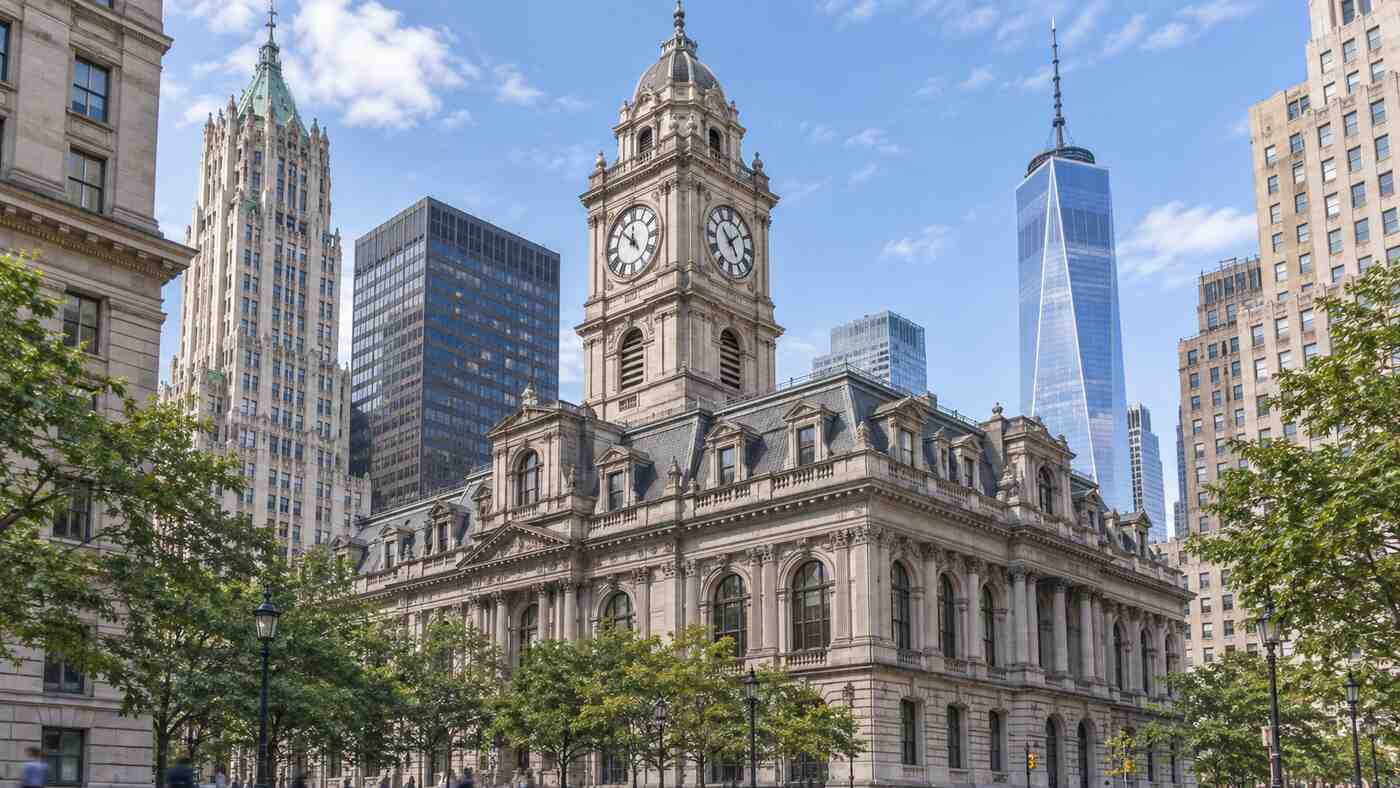
    A stone clock tower atop a grand nineteenth-century building in Lower Manhattan
    A former insurance building with a clock tower became a gallery home. Illustration.

    The big galleries arrive

    Large galleries opened Tribeca branches from the early 2020s. In 2022 The New York Times reported that Jack Shainman Gallery was taking 20,000 square feet in the Clock Tower Building at 108 Leonard Street, with an entrance at 46 Lafayette. The Italian Renaissance Revival building, designed by McKim, Mead & White for the New York Life Insurance Company and completed around 1898, is listed on the National Register of Historic Places. Shainman kept his Chelsea gallery on West 20th Street. David Zwirner runs a gallery at 52 Walker Street. ARTnews said a stream of midsize and blue-chip galleries opened Tribeca branches through 2023, including Anat Ebgi on Broadway near P.P.O.W., and that Blum moved to White Street. In October 2024 The Times reported that Marian Goodman Gallery, founded in 1977, had moved into a whole building in Tribeca from its long-standing home on West 57th Street, having never moved to SoHo or Chelsea. Its opening show, “Your Patience Is Appreciated”, brought together 50 artists spanning nearly five decades.

    The district has seen closures too. ARTnews reported in December 2023 that Queer Thoughts, Denny Gallery, Foxy Production and JTT had closed, with Denny the fourth gallery in the area to shut within three months.
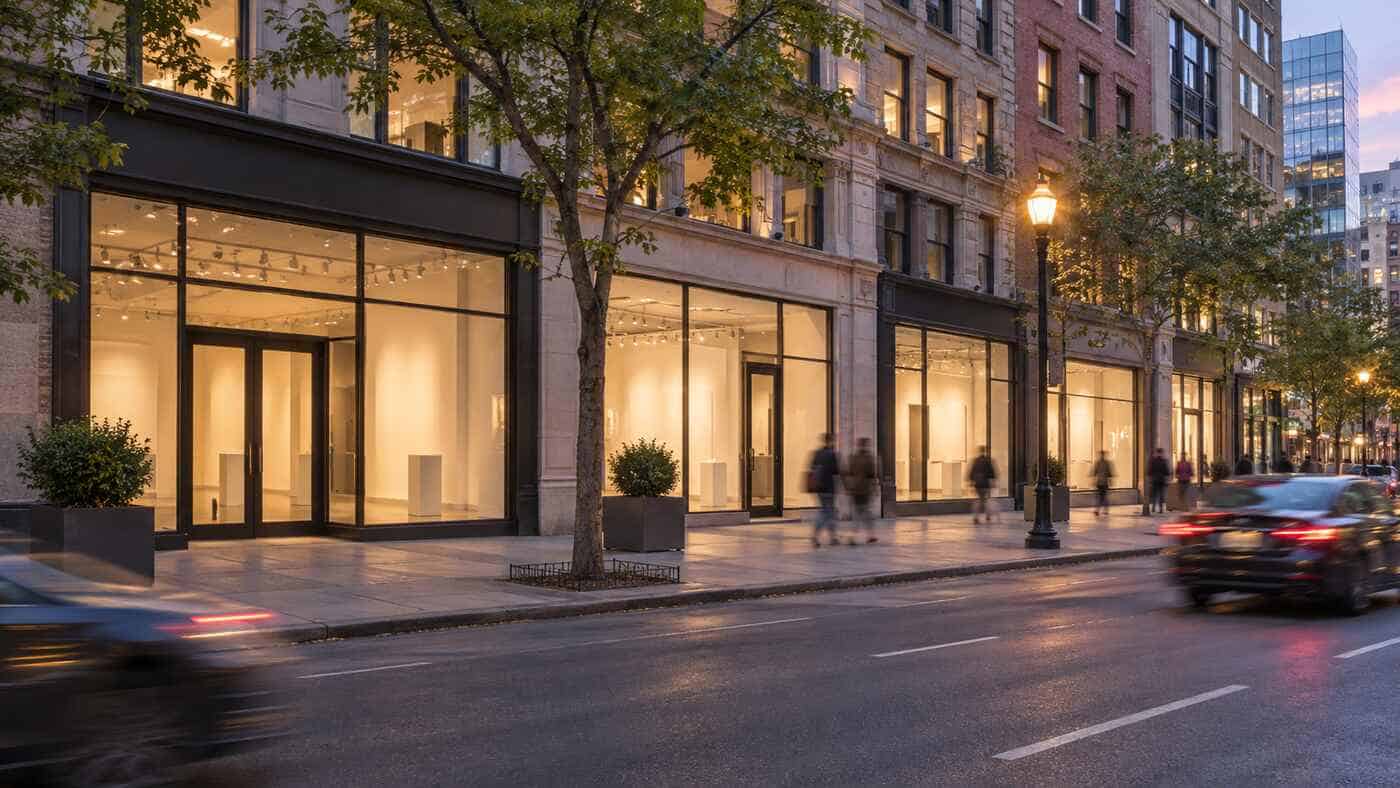
    A row of storefront galleries on a busy downtown avenue at dusk
    Broadway between Canal and Chambers now has several galleries. Illustration.

    Visiting Tribeca galleries

    The district is compact. Most galleries sit on Walker, White, Franklin, Leonard and Lispenard streets and along Broadway, and a walk between them takes minutes. Entry is free, and galleries generally keep Tuesday to Saturday hours, as ShoutNY’s gallery circuit guide notes, with Thursday the traditional opening night, usually from 6 to 8 pm. Gallery owner Charles Moffet told Hyperallergic that collectors can “pop right off the West Side Highway”,, and that they can also come by car or subway. For how the move fits the longer story, see our guides to Chelsea and the Lower East Side.

    Key takeaways

    • Tribeca art galleries cluster between Canal and Chambers streets, west of Lafayette Street.
    • Bortolami’s 2017 move from Chelsea to Walker Street started the current wave.
    • Nearly 60 galleries had opened by 2023, triple the 2019 number.
    • Rents are similar to Chelsea’s; dealers cited space, neighbourhood and community.
    • David Zwirner, Jack Shainman and Marian Goodman have Tribeca spaces.

    Common questions

    How many galleries are in Tribeca?

    Hyperallergic counted nearly 60 in central Tribeca in April 2023, triple the 2019 number. The Tribeca Arts District directory lists 94 art spaces, using a wider definition that includes nonprofits and nearby blocks. Numbers change as galleries open and close.

    Why did galleries leave Chelsea for Tribeca?

    Dealers cited bigger and cheaper-to-fit rooms in cast-iron lofts, a neighbourhood feel, and dislike of the towers around the High Line and Hudson Yards. Hyperallergic said the most common reason was that admired galleries were already in Tribeca. Rents are roughly comparable, ARTnews reported.

    Which streets in Tribeca have galleries?

    Walker Street, White Street, Lispenard Street, Leonard Street and Broadway between Canal and Chambers are the main gallery streets, according to reporting by Hyperallergic, ARTnews and The New York Times. David Zwirner is at 52 Walker Street.

    Is Tribeca the first gallery district to form this way?

    No. Hyperallergic set Tribeca in a long pattern of moves: SoHo in the 1970s, the East Village in the 1980s, Williamsburg in the mid-1990s, Chelsea from the late 1990s, and the Lower East Side and Bushwick in the mid-2000s. Jonathan Travis said some galleries were already in Tribeca around 2000.

    Are Tribeca galleries free to visit?

    Yes. Like all New York commercial galleries, they charge no admission and need no appointment during opening hours. Check each gallery’s website for current shows and hours, which vary in summer.

    How we put this together: counts, moves and reasons come from Hyperallergic, Condé Nast Traveler, ARTnews and The New York Times; rents from Hyperallergic, ARTnews and Artsy; addresses from gallery websites. Rents are as reported in the year shown.

    Sources

    Back to the Gallery Week Notes home page.
  • Chelsea art galleries: history and visitor guide

    Chelsea art galleries: history and visitor guide

    In short: Chelsea art galleries fill the blocks between West 18th and West 28th streets and 10th and 11th avenues. Dealers began moving into the area’s garages in the late 1980s and 1990s, and by 2007 it had about 350 galleries. Entry is free, most galleries open Tuesday to Saturday, and new shows usually open on Thursday evenings.

    West Chelsea is the largest concentration of commercial art galleries in New York, and for many visitors it is the first place they see contemporary art outside a museum. Most of the galleries that took part in New York Gallery Week in 2010 and 2011 were based here. This guide to Chelsea art galleries explains how the district formed, what a gallery visit involves and how to plan one. Gallery Week Notes is independent and has no commercial link to any gallery.

    What is the Chelsea gallery district?

    The Chelsea gallery district is the part of West Chelsea, on Manhattan’s West Side, where hundreds of commercial galleries occupy former garages, warehouses and industrial buildings. New York City Tourism describes it as largely concentrated between West 18th and West 27th streets and 10th and 11th avenues. The NYC-ARTS walking tour gives 18th to 28th Street. A commercial gallery is a business that represents artists and sells their work, while presenting exhibitions that anyone can visit for free.

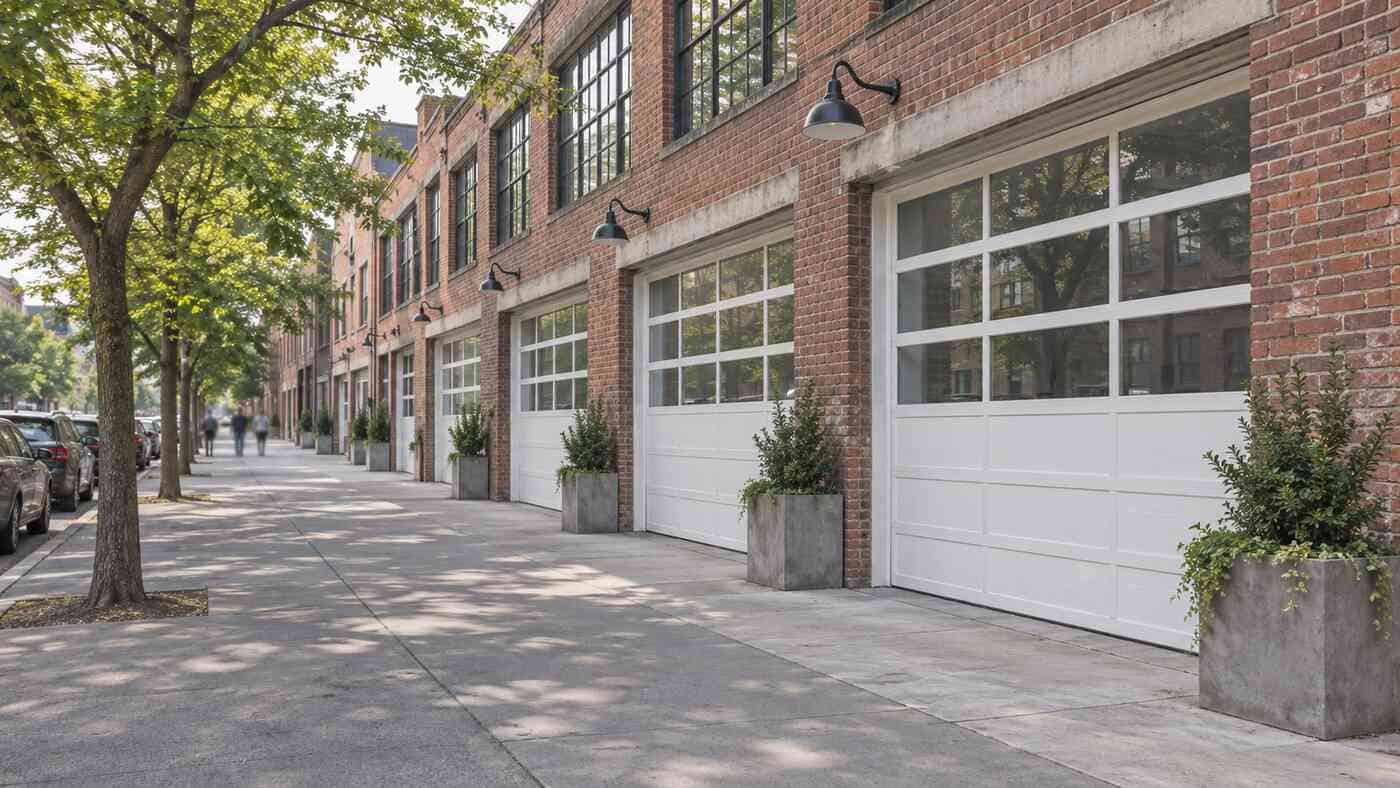
    A row of converted industrial garage doors painted white on a West Side street
    Former garages and warehouses became gallery spaces. Illustration.

    How Chelsea art galleries took over the district

    The move began in the late 1980s. A 1997 Los Angeles Times report traced it to the Dia Art Foundation, which opened in the area in 1987. Matthew Marks opened in October 1994 with an Ellsworth Kelly show, and Paula Cooper followed in October 1996 with Carl Andre, in a space designed by Richard Gluckman. A 2023 T Magazine history credits Pat Hearn with moving to Chelsea in 1994. In October 1997 The New York Times reported that ex-garages in West Chelsea were drawing galleries away from SoHo.

    The Los Angeles Times report explains why dealers came. Matthew Marks, on West 22nd Street in the same block as Dia, said his was the only gallery in Chelsea when he opened, and that 1,000 people came to the Kelly show. He had looked for space in SoHo, but “all the spaces I had looked at three years earlier had become stores”. Helene Winer and Janelle Reiring of Metro Pictures and Barbara Gladstone joined Marks in buying a former cutlery factory and garage on West 24th Street, which they called the “MGM building”. Winer told the paper that “SoHo did us in”. The appeal was physical too: wide streets, river light, no tall buildings casting shadows, and big concrete-floored rooms with skylights.

    Paula Cooper Gallery says it was the first gallery in SoHo, in 1968, moved to Chelsea in 1996 and opened at 521 West 21st Street in 1999. Our history of SoHo galleries explains what they left behind.

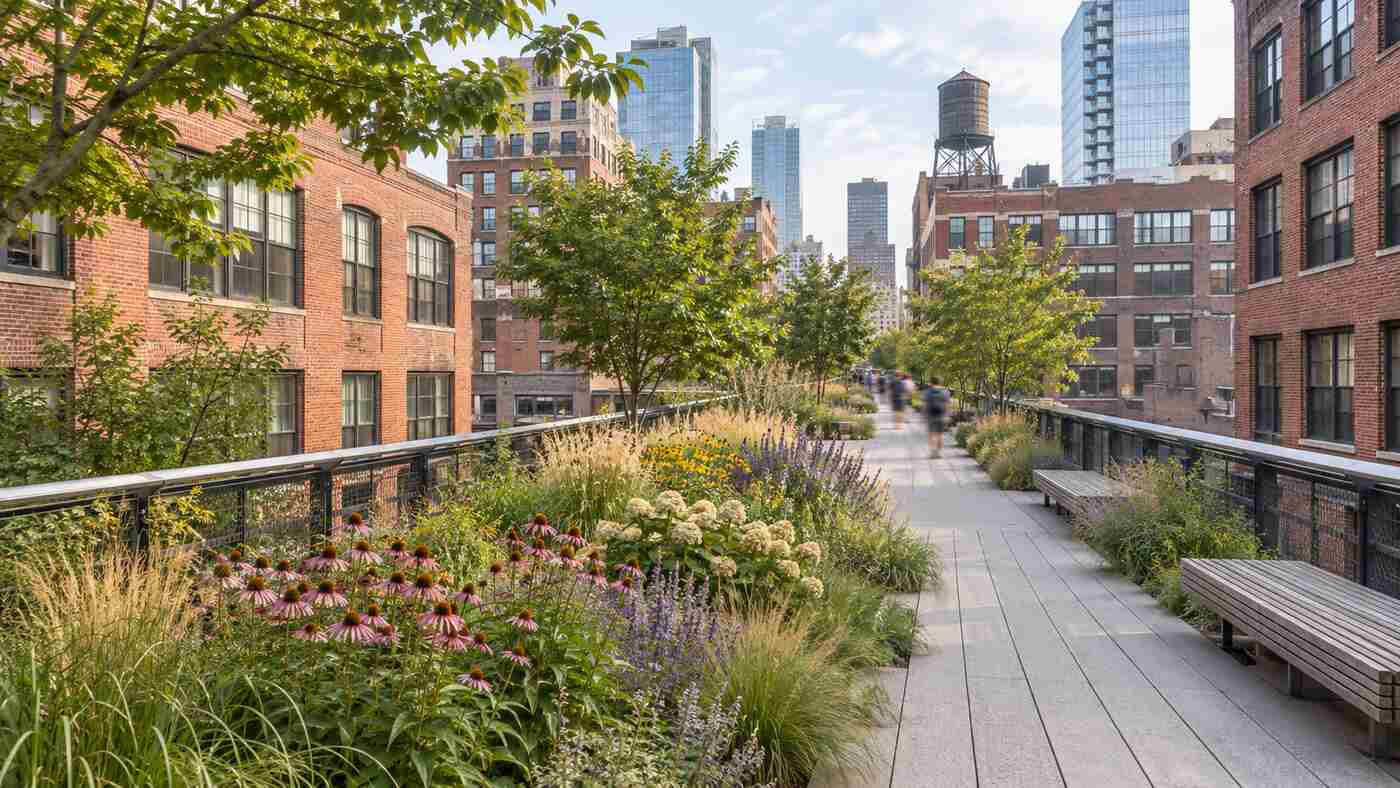
    An elevated linear park with planted walkways running between brick warehouses
    The High Line runs through the gallery district. Illustration.

    Chelsea art galleries over time

    YearGalleriesSource
    197513Observer, citing a 2013 study
    199534Observer
    199735 galleries and 2 nonprofits (gallery guide), or 67 (study)Los Angeles Times, Observer
    1999133Observer
    2002201 (peak in the study)Observer
    2003176Observer
    2007About 350T Magazine

    The figures come from different counts, so treat them as a trend rather than an exact series. The 2013 study reported by The Observer used its own definition of the area, and T Magazine’s figure is for the wider district.

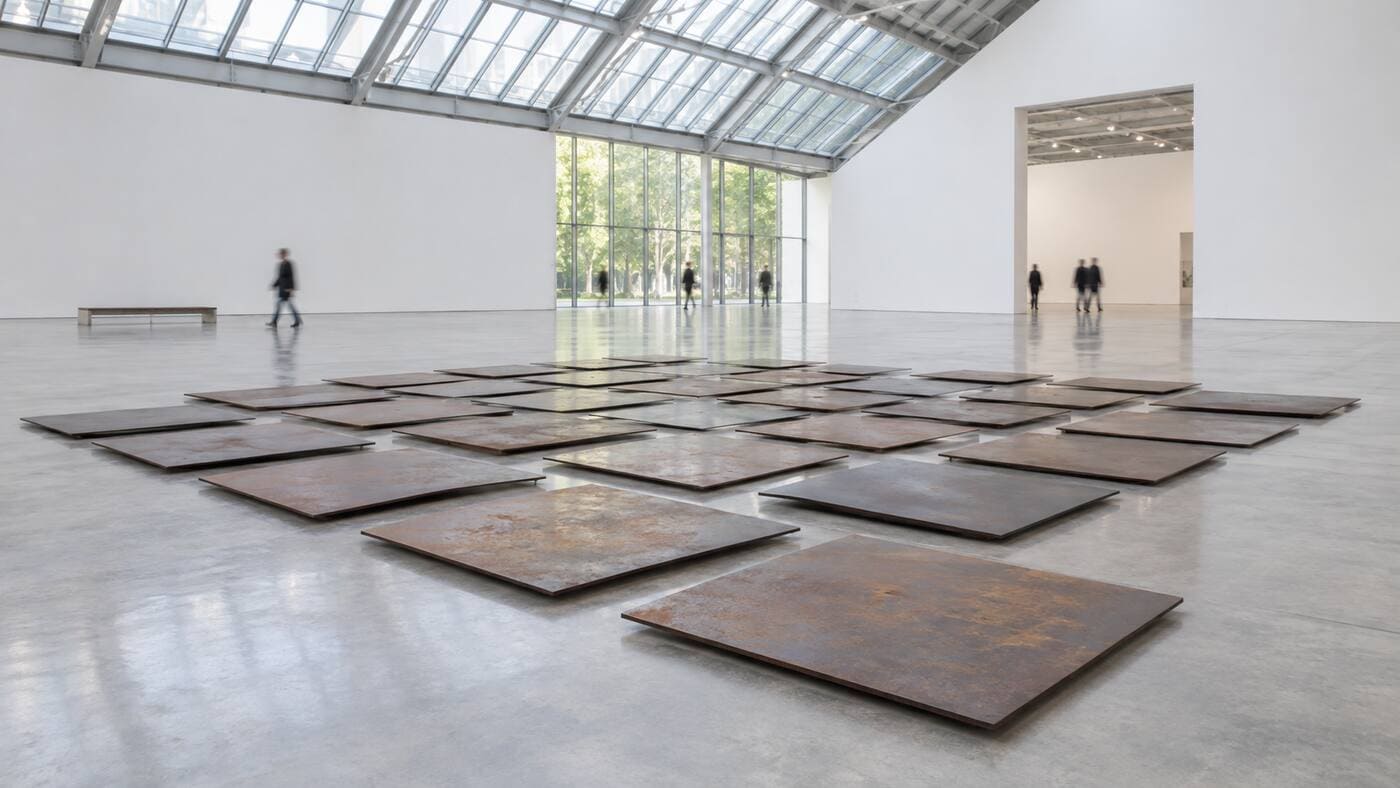
    A floor sculpture of square metal plates in a large skylit gallery
    Big column-free rooms suited large sculpture. Illustration.

    The High Line and the 2005 rezoning

    The district changed again in the 2000s. According to NYC-ARTS, much of West Chelsea was rezoned in 2005 to allow the development of the High Line, the park built on an old elevated railway, and to encourage the continued use of former industrial buildings as galleries. NYC-ARTS describes Chelsea today as home to hundreds of galleries and artists’ studios and an international hub for contemporary art. Since 2019 a wave of galleries has also opened in Tribeca, which our Tribeca gallery guide covers. Chelsea remains home to the largest galleries, many of which state on their websites that exhibitions are free and need no booking.

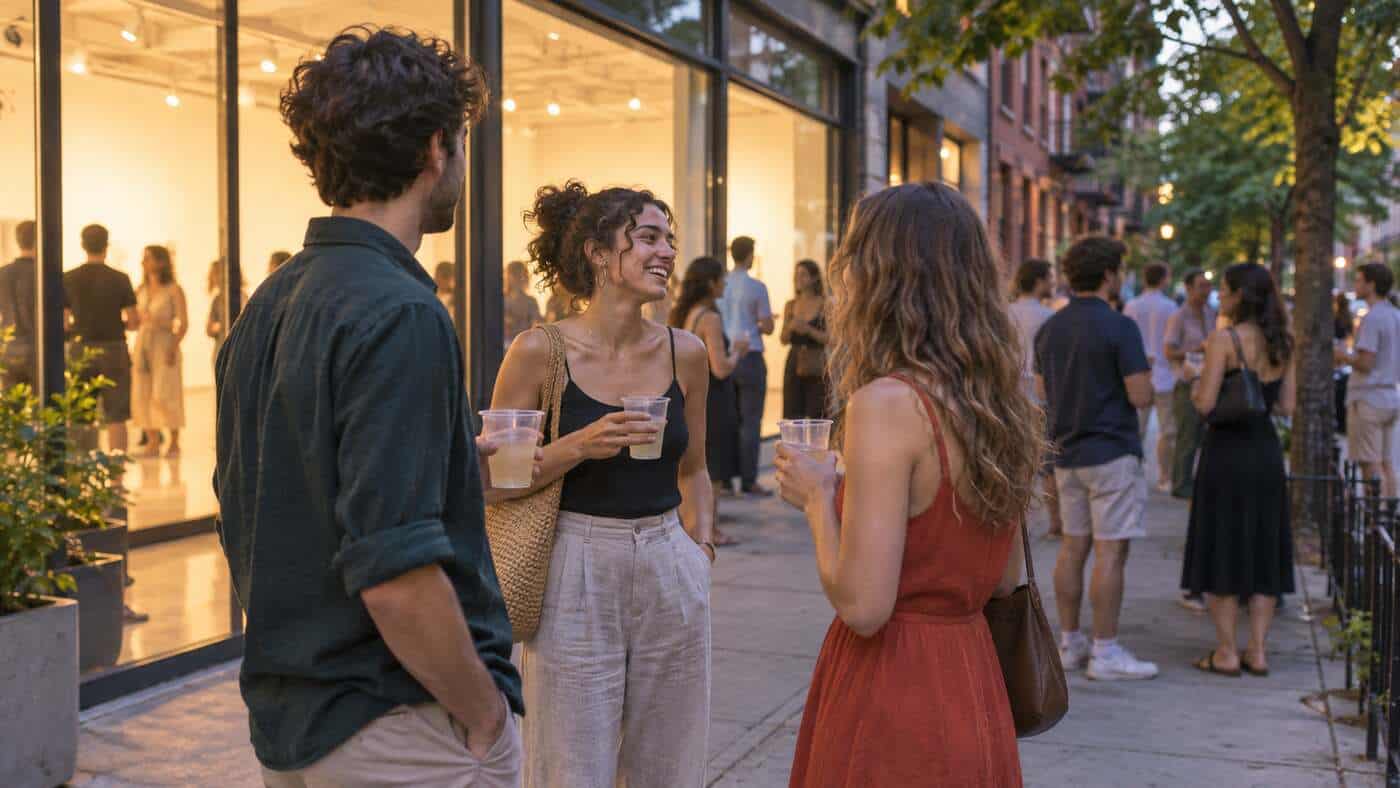
    People holding plastic cups on a sidewalk outside a lit gallery on a summer evening
    Thursday evening openings spill onto the street. Illustration.

    How do you visit Chelsea art galleries?

    A gallery visit is simple. On View notes that commercial galleries are free, that almost all open Tuesday to Saturday from about 10 am to 6 pm and close on Sunday and Monday, and that openings cluster on Thursday evenings from 6 to 8 pm. Hyperallergic confirms that most Chelsea galleries open new exhibitions on Thursday nights. Summer hours often differ, so check each gallery’s website.

    The etiquette is light. Cultured magazine says you can walk in without an appointment, that the one firm rule is not to touch the art, and that you can usually pick up a press release and ask for a price list at the front desk. New York City Tourism describes openings as good-natured and friendly affairs. Many galleries are on upper floors of shared buildings, so look for lobby directories.

    Key takeaways

    • Chelsea art galleries cluster between West 18th and West 28th streets and 10th and 11th avenues.
    • Dia opened in 1987, Matthew Marks in 1994 and Paula Cooper in 1996, drawing galleries from SoHo.
    • Gallery numbers rose from 13 in 1975 to about 350 by 2007, though counts differ by source.
    • The 2005 rezoning and the High Line reshaped the area.
    • Galleries are free, usually open Tuesday to Saturday, with openings on Thursday evenings.

    Common questions

    Are Chelsea galleries free?

    Yes. Commercial galleries in Chelsea charge no admission and need no ticket, according to New York City Tourism and On View. Some large galleries state on their own sites that exhibitions are free and need no advance booking. Museums and foundations may have their own rules.

    When are Chelsea galleries open?

    Most open Tuesday to Saturday, roughly 10 am to 6 pm, and close Sunday and Monday, according to On View. Hours change in summer and between exhibitions, so check each gallery’s website before you go. New shows usually open on Thursday evenings.

    Can anyone go to a gallery opening?

    Generally, yes. Openings at commercial galleries are usually free and open to the public, typically from 6 to 8 pm. Cultured magazine notes that drinks are often offered and that you can still look at the art while others talk.

    Why did galleries leave SoHo for Chelsea?

    Dealers wanted bigger rooms and lower costs. The Los Angeles Times reported in 1997 that SoHo’s large ground-floor spaces had been taken by shops, while Chelsea’s garages and factories offered vast, plain, skylit rooms with concrete floors. Metro Pictures’ Helene Winer said SoHo had been “overrun” by businesses unrelated to art.

    Which streets have the most galleries?

    New York City Tourism defines the core as West 18th to West 27th Street between 10th and 11th avenues, and its guide lists 25 essential venues street by street. The first big spaces in the 1990s were on West 21st, 22nd and 24th streets, according to the Los Angeles Times.

    How we put this together: the district’s history comes from the Los Angeles Times, The New York Times, T Magazine and Paula Cooper Gallery; gallery counts from the Observer and T Magazine; visiting advice from New York City Tourism, On View, Hyperallergic and Cultured. Hours change, so always check a gallery’s own website.

    Sources

    Back to the Gallery Week Notes home page.
  • Lower East Side art galleries: history and guide

    Lower East Side art galleries: history and guide

    In short: Lower East Side art galleries grew from a handful of artist-run and young spaces in the early 2000s into a district of about 224 galleries by 2015. The New Museum’s move to 235 Bowery in December 2007 helped anchor the area. Galleries here are often smaller than in Chelsea, show more emerging artists and usually open on Sundays.

    If Chelsea is New York’s gallery mall, the Lower East Side is its side streets. Galleries occupy old shops, tenement ground floors and basements around Orchard, Rivington, Chrystie and Grand streets and the Bowery. Several of them, including Canada, Eleven Rivington and James Fuentes, took part in New York Gallery Week. This guide covers how the district formed and how to visit it. Gallery Week Notes is independent and has no commercial link to any gallery.

    What is the Lower East Side gallery district?

    The Lower East Side is the historic immigrant neighbourhood of Manhattan east of the Bowery and south of Houston Street. Its gallery district spreads across the LES and into neighbouring Chinatown. A project space, a term often used here, is a small gallery or room that shows experimental or short-run exhibitions, sometimes run by artists themselves. Time Out New York keeps a current list of the area’s best galleries.

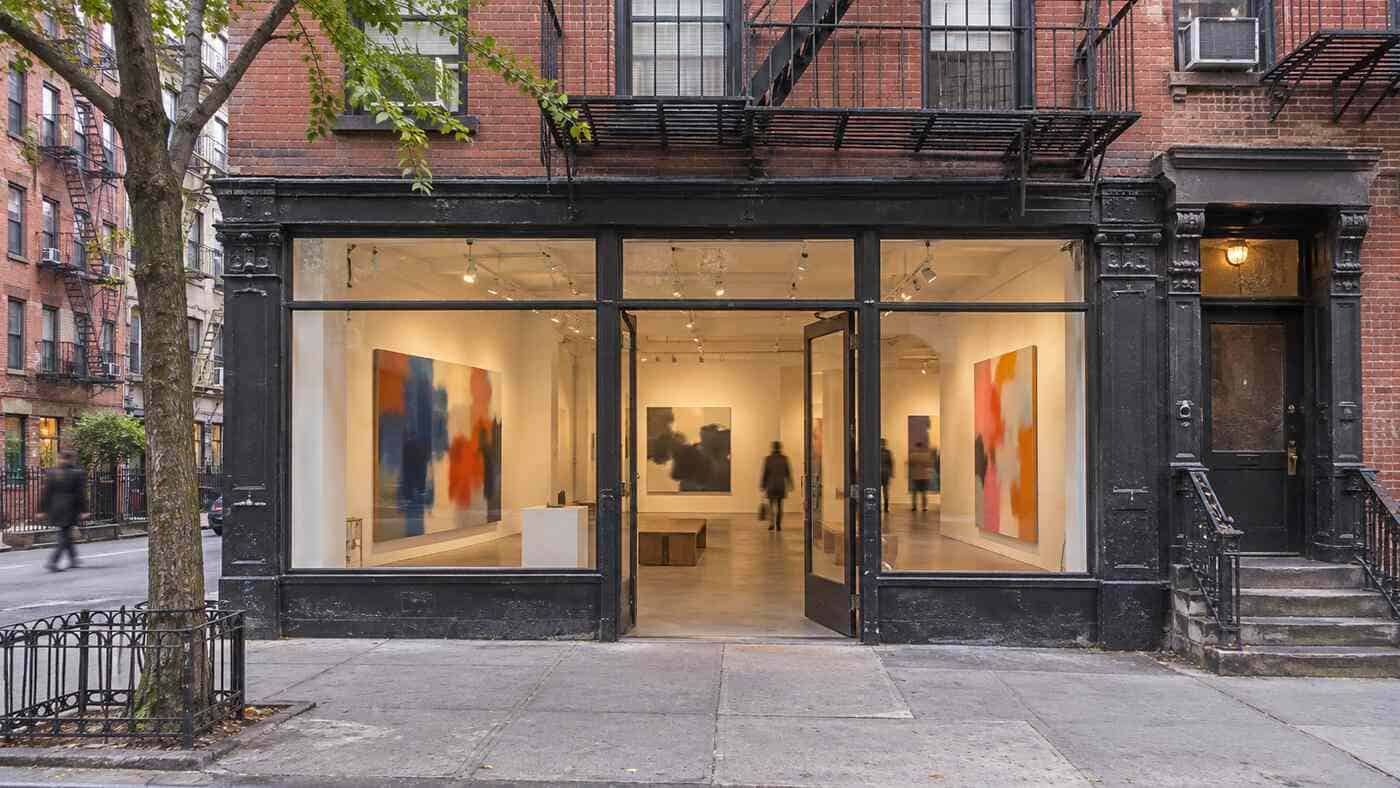
    A small storefront gallery in a red brick tenement with a fire escape above
    Many galleries took over former shops in tenement buildings. Illustration.

    How did the Lower East Side become a gallery district?

    The early spaces were small. Artsy’s 2016 history of the district dates Cuchifritos to 2001, Canada to 2002, Reena Spaulings Fine Art to 2003, Miguel Abreu to 2006, and James Fuentes and Eleven Rivington to 2007. The Art Newspaper also traced a wave of commercial start-ups in the neighbourhood from 2002.

    The turning point was a museum. The New Museum, founded on 1 January 1977 by the former Whitney curator Marcia Tucker, reopened in its own building at 235 Bowery on 1 December 2007. The building was designed by SANAA, the Tokyo practice of Kazuyo Sejima and Ryue Nishizawa, on a former parking lot. Wikipedia notes the museum’s earlier homes on Fifth Avenue and at 583 Broadway in SoHo. Artsy says the gallery count climbed steadily from before 2007, when the museum opened.

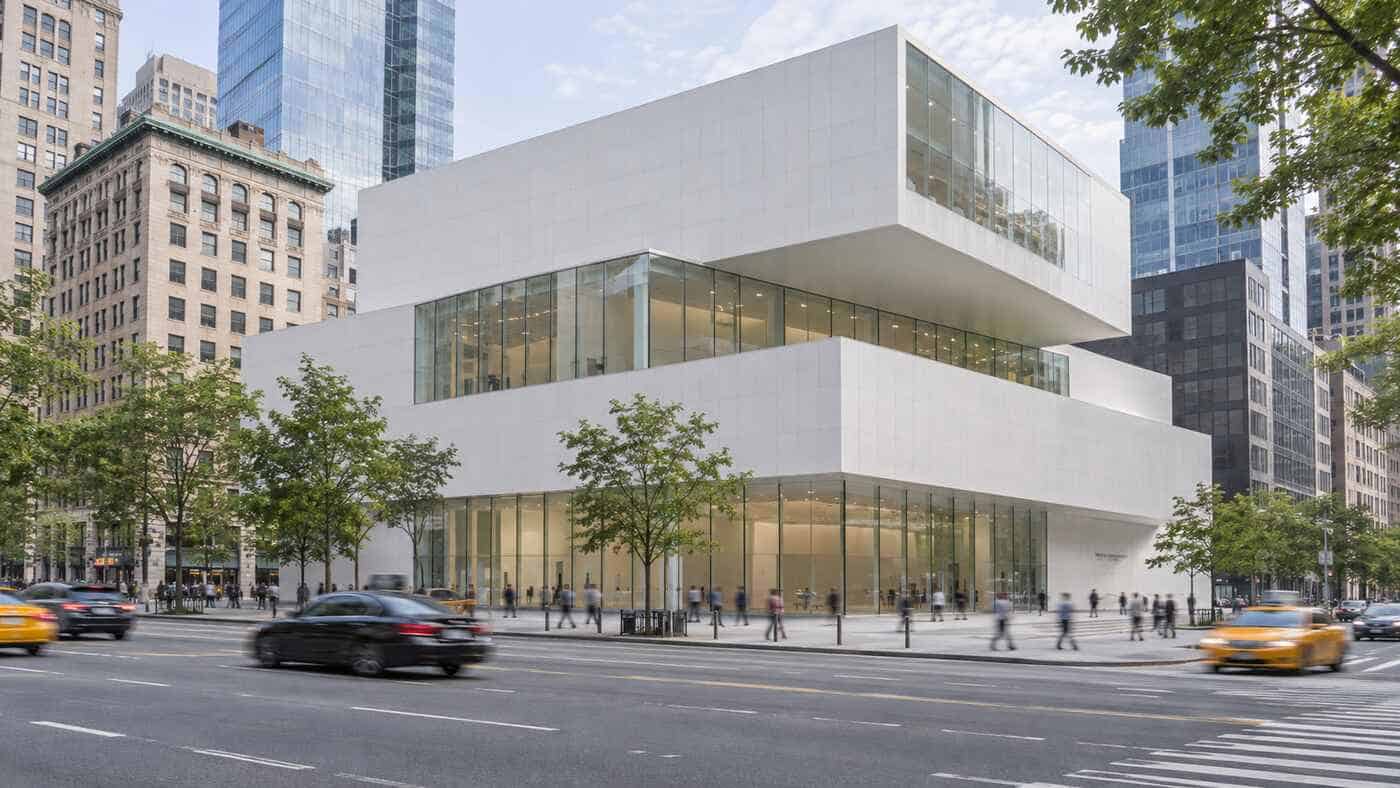
    A white museum building of offset stacked boxes on a busy downtown avenue
    The New Museum opened on the Bowery in 2007. Illustration.

    Growth after 2011

    Artsy dates the “real surge” to 2011. That May, The Local East Village counted 23 galleries on Orchard Street alone and between 71 and 75 in the wider area. By September 2015, Artsy reported, citing Crain’s New York Business, the Lower East Side had about 224 galleries.

    Larger galleries followed the young ones. ArtReview notes that Lehmann Maupin opened at 201 Chrystie Street in 2007 and that Sperone Westwater moved into a Norman Foster building on the Bowery in 2010. Artsy records Marianne Boesky’s Clinton Street space in May 2014 and Gavin Brown’s enterprise, 47 Canal and Nathalie Karg at 291 Grand Street from 2014. Chelsea dealers gave cost as a reason: CBRE’s Stuart Siegel told Artsy that rents on Chelsea’s best blocks ran 20 to 45 a square foot in 2016, more than double the figure ten years before.

    Individual dealers gave Artsy their reasons. Betty Cuningham, who moved from Chelsea in 2014, said her real estate taxes had gone from $1,500 in her second year there to $42,000 in her last. Steven Sacks moved bitforms gallery from 20th Street to Allen Street after 13 years in Chelsea. Joe Amrhein brought Pierogi, founded in Williamsburg in 1994, to Suffolk Street because gentrification had scattered Brooklyn’s art community. James Fuentes said that visiting the Lower East Side had become “mandatory” for a true art lover, “on a totally equal playing field” with Chelsea, if on a smaller scale. He also warned that galleries might in time be priced out of the neighbourhood too.

    Lower East Side gallery timeline

    YearEventSource
    2001Cuchifritos opensArtsy
    2002Canada opensArtsy
    2003Reena Spaulings Fine Art opensArtsy
    2007New Museum opens at 235 Bowery; James Fuentes, Eleven Rivington and Lehmann Maupin openNew Museum, Artsy, ArtReview
    2010Sperone Westwater opens on the BoweryArtReview
    201171 to 75 galleries countedThe Local East Village
    2015About 224 galleriesArtsy, citing Crain’s
    2022New Museum breaks ground on an OMA expansionNew Museum
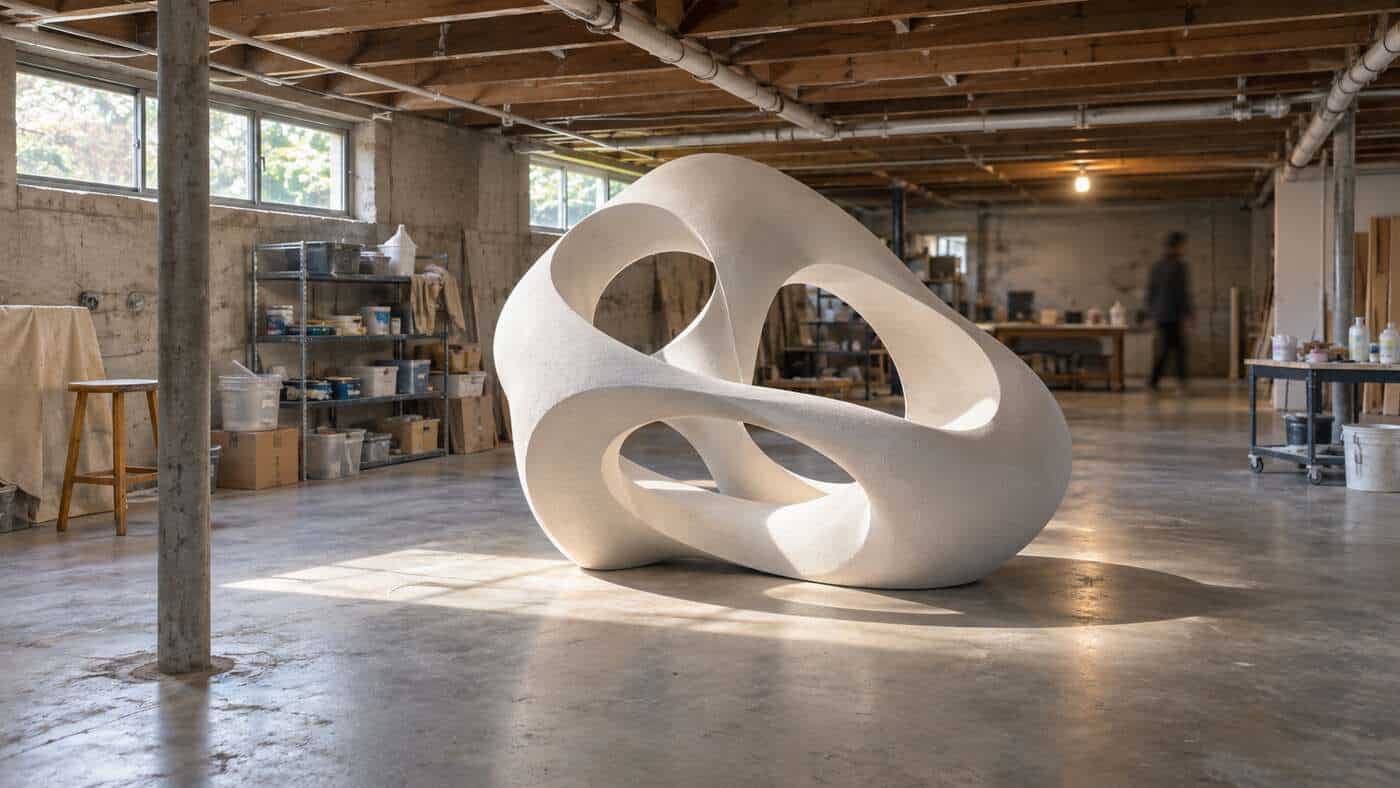
    A low-ceilinged basement project space with one bright sculpture on a concrete floor
    Small and unusual spaces suited emerging artists. Illustration.

    Why Sunday is gallery day downtown

    The Lower East Side keeps different hours from Chelsea. Augusto Arbizo of Eleven Rivington told Hyperallergic that LES galleries mostly open shows on Sundays so as not to compete with openings elsewhere, and that they first mirrored the New Museum’s Wednesday to Sunday hours. Nathalie Karg told Artsy that collectors often spend Saturday in Chelsea and come downtown on Sunday. New York Gallery Week used the same pattern in 2010, holding its downtown receptions on Sunday, as our New York Gallery Week history explains.

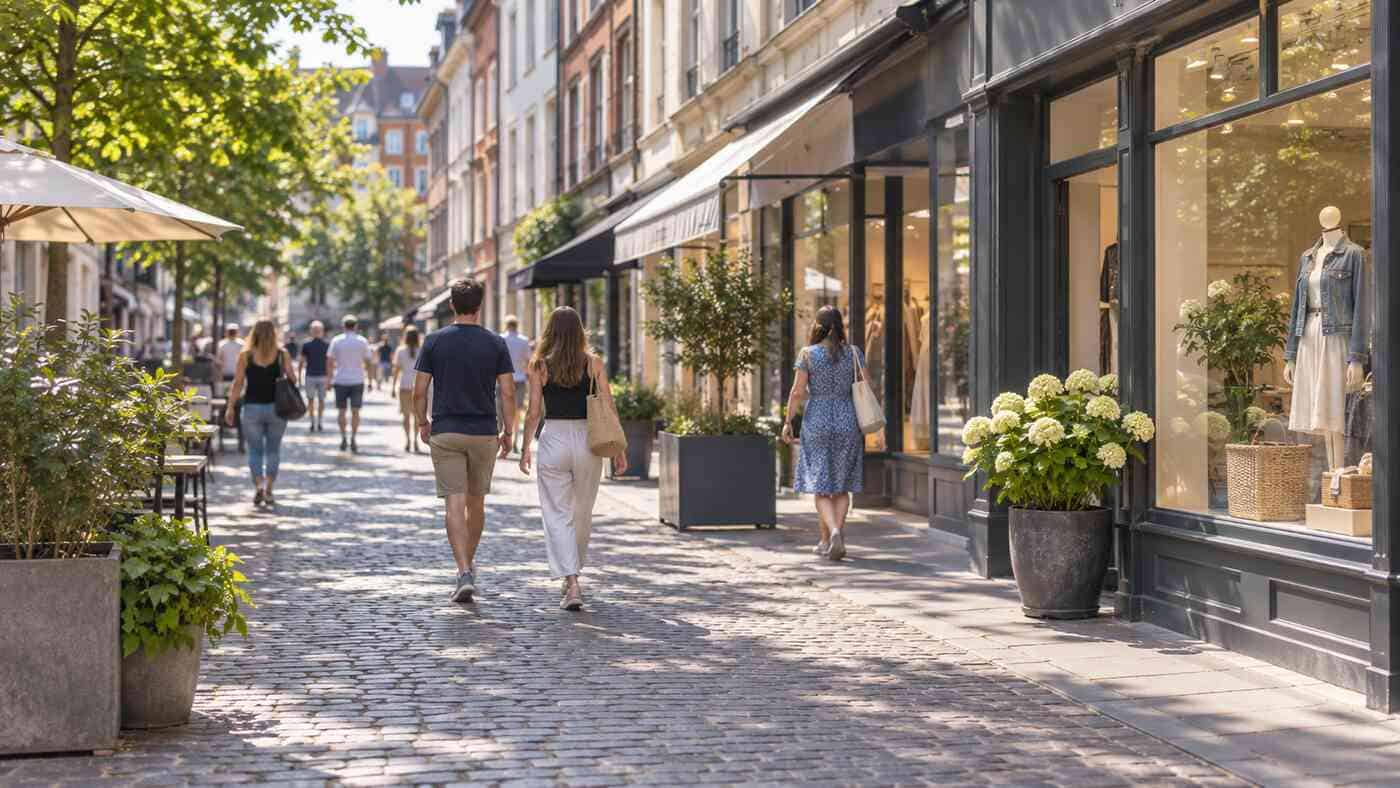
    People strolling past shopfronts on a narrow downtown street on a sunny Sunday
    Downtown galleries often open on Sundays. Illustration.

    Visiting the Lower East Side today

    Gallery visits here are free, like everywhere in New York, and many spaces are on upper floors or in basements, so check addresses carefully. ShoutNY’s neighbourhood guide reports that the New Museum reopened with its OMA-designed expansion in March 2026, and the museum’s own history page describes a 60,000-square-foot addition that doubles its exhibition space. Since 2019 some downtown galleries have also moved west to Tribeca, covered in our Tribeca gallery guide.

    Key takeaways

    • Lower East Side art galleries began with small spaces such as Cuchifritos (2001) and Canada (2002).
    • The New Museum’s opening at 235 Bowery on 1 December 2007 anchored the district.
    • Counts rose from 71 to 75 galleries in 2011 to about 224 by 2015.
    • Many LES galleries open new shows on Sundays and keep Sunday hours.
    • Rising Chelsea rents pushed established galleries downtown in the 2010s.

    Common questions

    Are Lower East Side galleries open on Sunday?

    Many are. Hyperallergic reported that LES galleries mostly hold openings on Sundays and first matched the New Museum’s Wednesday to Sunday schedule. Hours vary from gallery to gallery, so check each website before you set out.

    How many galleries are on the Lower East Side?

    Artsy, citing Crain’s New York Business, reported about 224 in September 2015. In May 2011 The Local East Village had counted 71 to 75. More recent counts depend on where the district’s edges are drawn, since it now runs into Chinatown.

    When did the New Museum move to the Bowery?

    The New Museum reopened at 235 Bowery on 1 December 2007, in a building designed by SANAA. It broke ground on a 60,000-square-foot expansion by OMA in November 2022, according to the museum.

    Did Lower East Side galleries take part in New York Gallery Week?

    Yes. FAD magazine’s 2010 list included Canada, Eleven Rivington, James Fuentes and Miguel Abreu, all galleries that Artsy places among the district’s early spaces. In 2010 the week’s Bowery and Lower East Side receptions were held on the Sunday evening.

    What is the difference between the Lower East Side and Chelsea?

    Lower East Side galleries tend to be smaller, often in former shops and tenements, and show more emerging artists. Chelsea has the large, purpose-built spaces of the biggest galleries. Dealers quoted by Artsy also cited lower costs and a strong community of young galleries downtown.

    How we put this together: founding dates and counts come from Artsy, The Local East Village and ArtReview; the museum’s history from the New Museum and Wikipedia; Sunday hours from Hyperallergic. Gallery counts are from different years and definitions, so we give each with its date.

    Sources

    Back to the Gallery Week Notes home page.